LEARNING OUTCOMES
Both individually and in teams, you apply a relevant methodological approach used in the professional field to formulate project goals, involve stakeholders, conduct applied research, provide advice, make decisions, and deliver reports. In doing so, you keep in view the relevant ethical, intercultural, and sustainable aspects.
I wrote information about: - Current Situation Analysis/SWOT,
- Methodology: 4. Conducting Survey,
and Abstract.
Gitwiki about the Advice Report
What Happened:
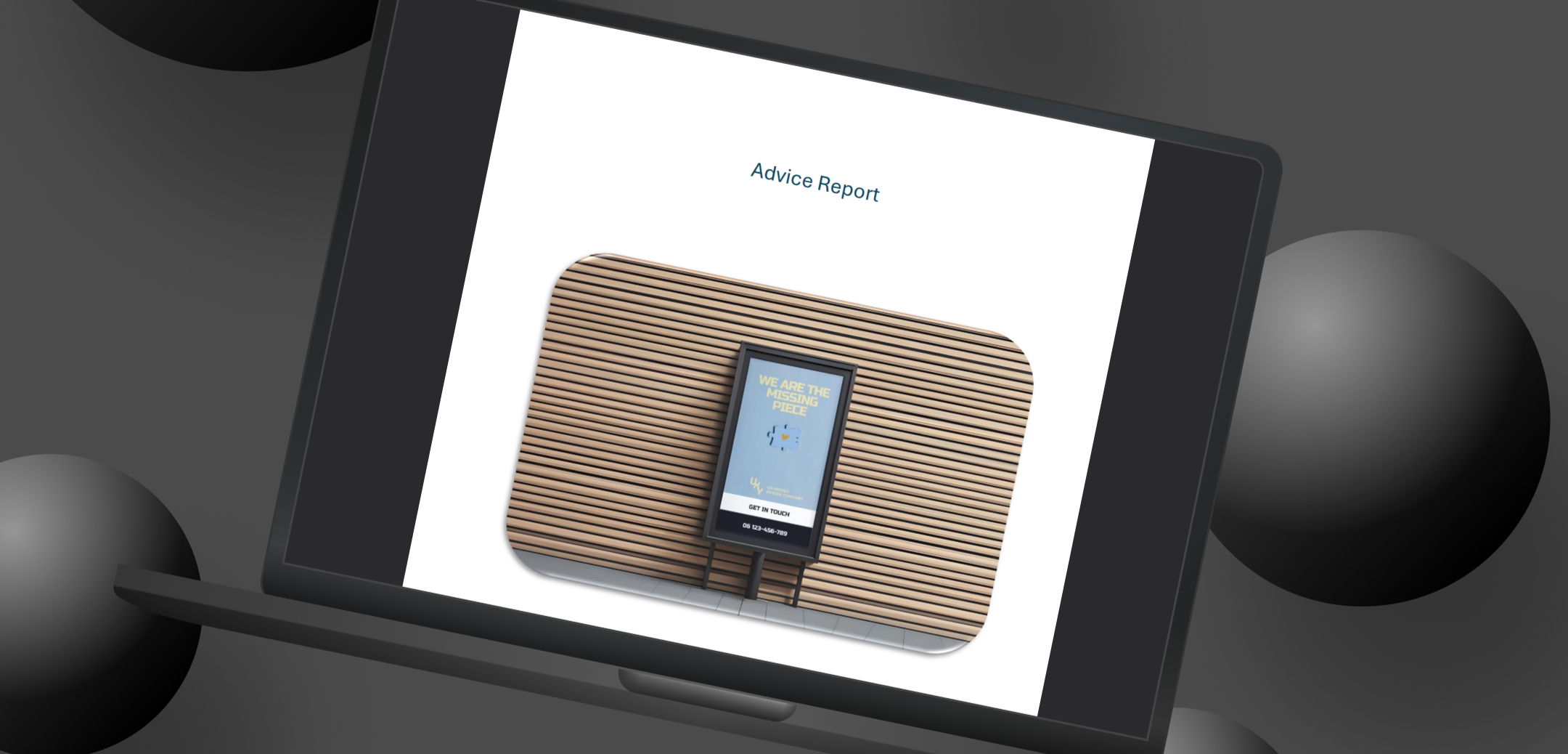
Me, Sander, and Briahna wrote the advice report. We sat together and split up the tasks, drawing inspiration from the advice report provided on Canvas.
How Did It Go?
It went pretty smoothly. Once we started, it didn't take long to finish. The methodology section (4. Conducting Survey) is something I had written before after conducting a survey. Analyzing the strengths, weaknesses, opportunities, and threats (SWOT) of the product was a nice exercise, helping me improve how I evaluate our game.
Link Between Learning Outcomes (LO) and What I Did:
The advice report is where we explain our product, its current state, and future development options. This directly aligns with the learning outcome of making decisions and delivering reports.
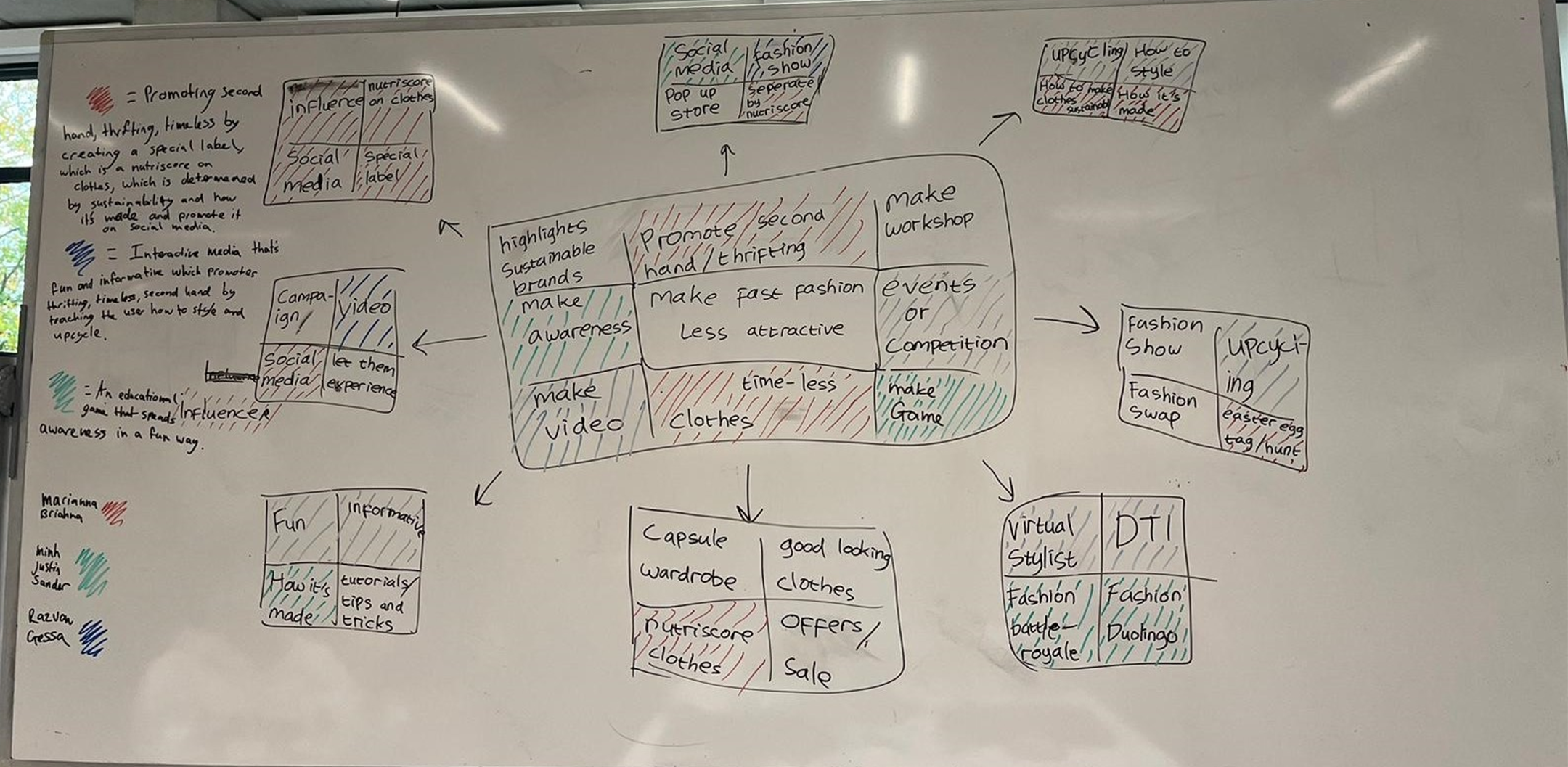
The group was kinda procrastinating so I initiated a brainstorming session. I looked online for fun methods that we could use to engage the group and just have a good time. I chose lotus blossom and brain writing. The brainstorming session was a great success, we had fun generating ideas and it really helped us get back on track.
Gitwiki about our brainstorming session
I recommend that you view the detailed documentation since on there there is an image of the before and after side by side between versions with feedback and why it is an improvement.
Link Between Learning Outcomes (LO) and What I Did:
You apply a relevant methodological approach used in the professional field...
Relevant Methodologies Used
Brainstorming -> Lotus Blossom:
Insights:
Brainstorming -> Brain Writing:
Insights:
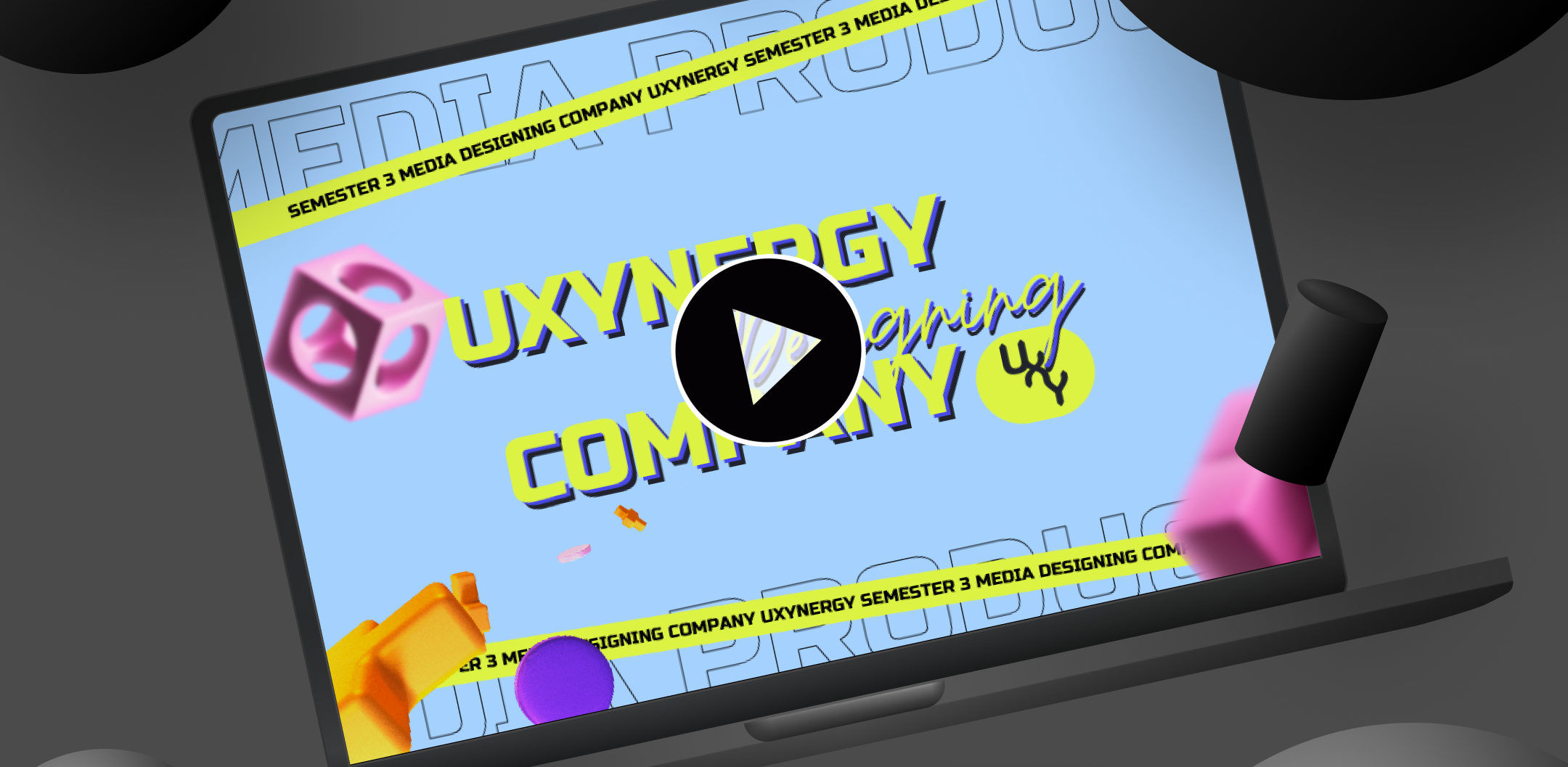
Me and Minh worked on our pitch video in which we presented ourselves to the client. It is a short presentation where we tell the client about our team and what we can offer them.
Gitwiki about the pitch
Video
I recommend that you view the detailed documentation since on there there is an image of the before and after side by side between versions with feedback and why it is an improvement.
Link Between Learning Outcomes (LO) and What I Did:
You apply a relevant methodological approach used in the professional field...
What I Did:
Me and Minh prepared a short presentation about our brand, team, and what we can offer the client. We had to make a video anyway for Stan and Dirk's class, and we decided that we could kill two birds with one stone by making the video into a pitching video as an addition for our motivation letter. The client said that she liked our brand guide and appreciated the pitch video when we had the interview with her recently.
How Did It Go?
It went well. I agreed with Minh that I would start with the pitch video and get as far as I could, and he would finish it. I managed to get 75% done, and Minh did the extra things like shortening the slides for better flow, changing the background song, and finishing one page I didn't manage to complete.
For our project we had do to research and I took the task to do secondary research about gamification and look at competitors that are gamified such as Duolingo. It was important since gamification is our desired method to keep our target audience engaged and it matches the age group well.
Gitwiki about the competetive analysis
I recommend that you view the detailed documentation since on there there is an image of the before and after side by side between versions with feedback and why it is an improvement.
Link Between Learning Outcomes (LO) and What I Did:
You apply a relevant methodological approach used in the professional field...
Relevant methodologies used
Competitor Analysis
How does Duolingo use gamification in order to keep the users engaged in a fun and informative way?
Duolingo uses several gamification features such as XP and levels, Streaks and Daily goals, Badges and Achievements, Virtual currency, Leaderboards and Challenges, and Rewards for Mastery.
Users want to be able to see their progress easily and get feedback, which can be offered by increased levels, XP points, and badges. These motivate the users to keep achieving a higher level.
Users enjoy getting achievements and reaching milestones. A function like a daily streak and an achievement for getting a flawless round keeps users engaged.
Rewarding your users with consistent streaks and goals fosters a sense of accountability and motivation, which will improve long-term commitment.
Users face several challenges that are addressed by gamification.
How does Duolingo use social media to their advantage to gain popularity?
Duolingo focuses on both Gen Z and millennials in the age group of 16 to 34. Besides personalizing and gamification, they invested in creating a playful and fun digital presence on social media platforms. They focus on entertaining videos that match their target audience. Duolingo shows its personality via a fun biography on TikTok with “just an owl tryna vibe.”
Sources:
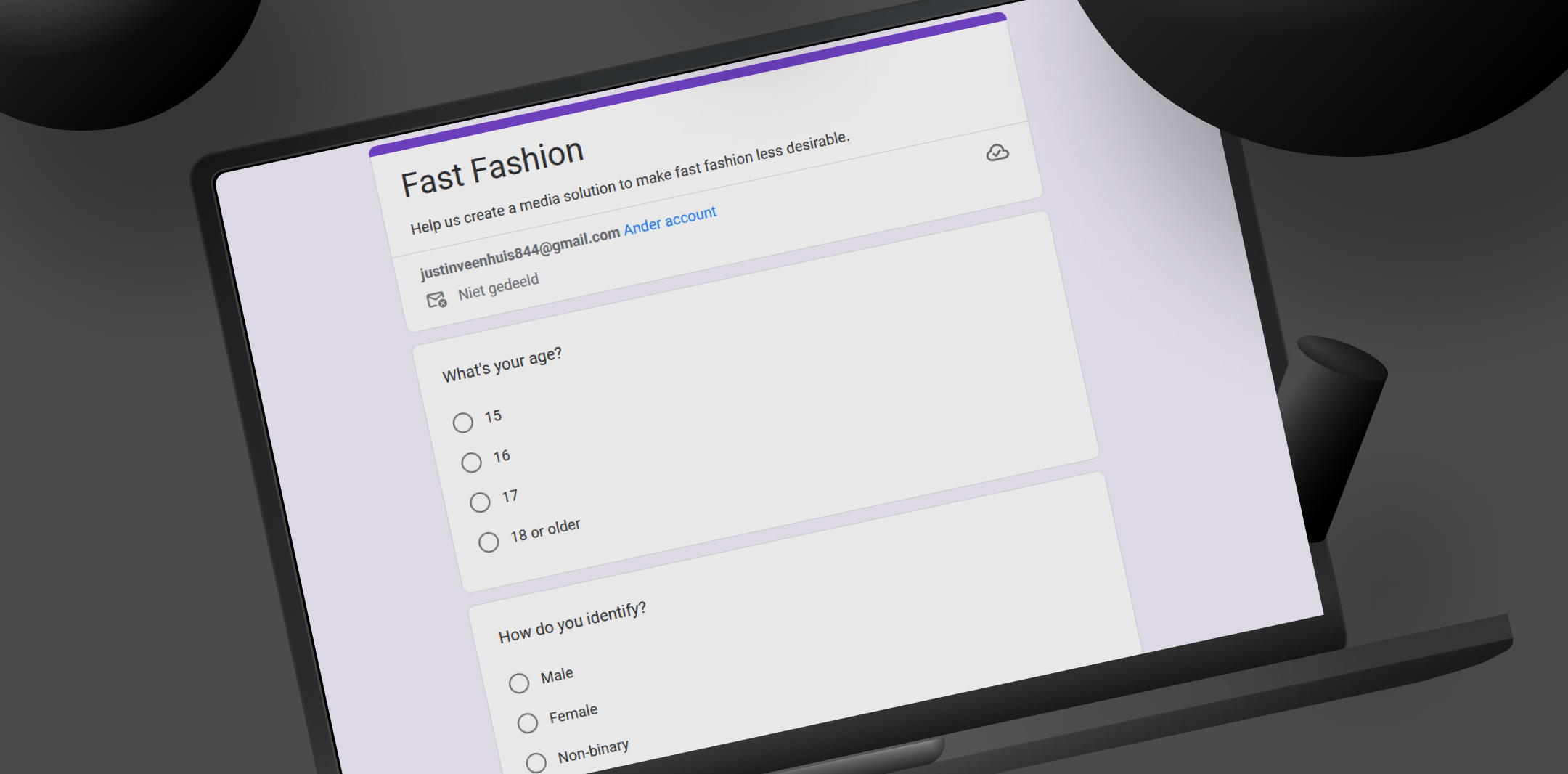
Sander created a base of questions which I asked feedback on and I got told that they were too detailed since our target audience is a bit too young for advanced English. After that I took it upon myself to create the survey. I asked feedback on it, made changes to questions, simplified them, deleted unnecessary ones, created a poster for the survey, put it in google forms and I have summarized the findings.
Gitwiki about the survey
View survey
I recommend that you view the detailed documentation since on there there is an image of the before and after side by side between versions with feedback and why it is an improvement.
Link Between Learning Outcomes (LO) and What I Did:
You apply a relevant methodological approach used in the professional field...
What I Did:
Sander created a base of questions which I asked feedback on and I got told that they were too detailed since our target audience is a bit too young for advanced English. After that, I took it upon myself to create the survey. I asked feedback on it, made changes to questions, simplified them, deleted unnecessary ones, created a poster for the survey, put it in Google Forms, and summarized the findings.
Survey Link: Survey
How Did It Go?
It went really well. I made sure to create iterations based on feedback and write them down in Feedpulse. The survey is clear, short, and it will help us a lot in our project regarding our design choices so that we match user-needs.
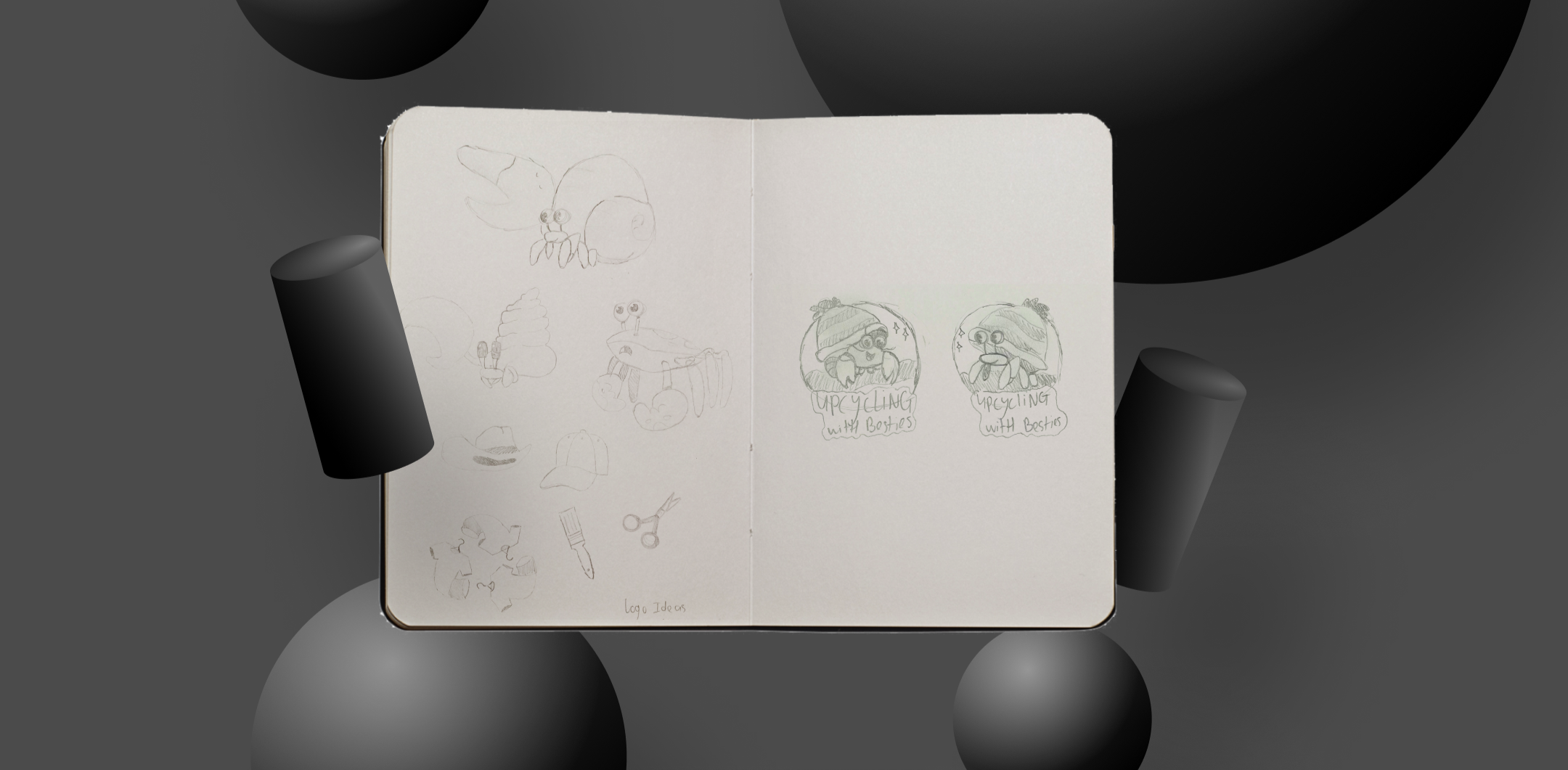
I had two ideas sketched out but was not sure which one to use and further develop. So I did an A/B test to figure out which version the target audience was most attracted to. It went really well, I went to people that fit the age group of our target audience and asked them a couple questions to see how much they like the idea and which emotions came up for them. I wrote all of the data down and analysed them.
Gitwiki about the A/B test
I recommend that you view the detailed documentation since on there there is an image of the before and after side by side between versions with feedback and why it is an improvement.
Link Between Learning Outcomes (LO) and What I Did:
You apply a relevant methodological approach used in the professional field...
How I Conducted the A/B Test:
Target Audience: I went to a variety of people for this test. Our target audience was between 15-24. Some were friends, some students in the OIL at that time, and some were family. All participants were within the age group.
Groups: Group A and B were a mix of people between 15-24, both with an average age that was very similar.
Test Strategy: I prepared two sketches and showed Group A the first one and Group B the second one.
Questions asked:
Test Strategy Details:
The test strategy was to show each logo to a separate group that fit the target audience, asking them a few questions about their emotions, opinions, and what they thought. The goal was to see which sketch was better and could be used for further development of an engaging logo for our game.
Was it a success?
Yes, even though there wasn't a huge difference between the results, it provided a good indicator of which logo was better and could be used for the next steps.
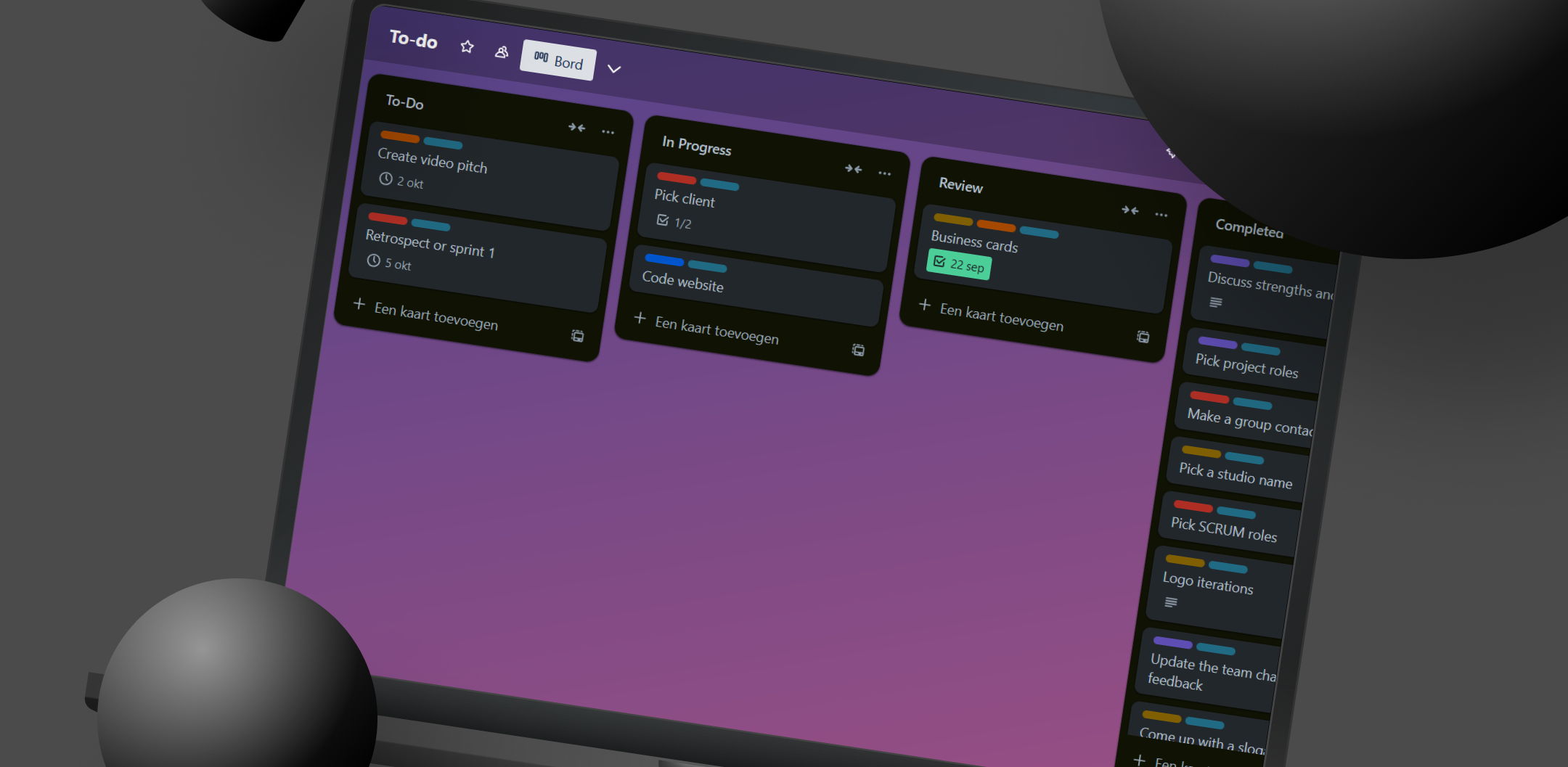
We have sprints each lasting an average of 2 weeks and after each sprint we have a retrospective and we use the Keep, Add, Less & More method. We do something like a stand-up meeting where we let each other know on what everyone is working on and we keep each other up-to-date. For each task we link it to which Learning Outcome it is connected to.
Gitwiki about the scrum
View trello
I recommend that you view the detailed documentation since on there there is an image of the before and after side by side between versions with feedback and why it is an improvement.
Link Between Learning Outcomes (LO) and What I Did:
You apply a relevant methodological approach used in the professional field...
What I Did:
Using Scrum: We have sprints, each lasting an average of 2 weeks. After each sprint, we have a retrospective and we use the Keep, Add, Less & More method. We hold stand-up meetings where we update each other on what everyone is working on, ensuring everyone is up-to-date. Each task is linked to the respective Learning Outcome it connects to.
Following the Double Diamond: The group project follows the double diamond method. We are currently nearing the middle point between the two diamonds. I apply this method to my individual process as well, clearly noting which parts of the double diamond I have worked on. I make sure to follow DD well since it’s what I plan to use for my internship.
How Did It Go?
The team dynamic has been quite effective as we keep each other up-to-date, ensuring that everyone knows what still needs to be done thanks to Scrum. We hold weekly stand-ups and retrospectives after each sprint to ensure productivity. The first sprint was rough, as we didn’t have many stand-ups and the retrospective revealed many areas for improvement. However, since implementing more stand-ups and retrospectives, the process has been running smoothly.
Link Between Learning Outcomes (LO) and What I Did:
Using Scrum and the Double Diamond aligns with professional practices by providing structure, especially in a team context. These methodologies help formulate project goals, both during the sprints (Scrum) and the define phase (Double Diamond). Regular contact with stakeholders ensures we're addressing important aspects, and the methods help with decision-making, providing advice, and delivering reports effectively.